
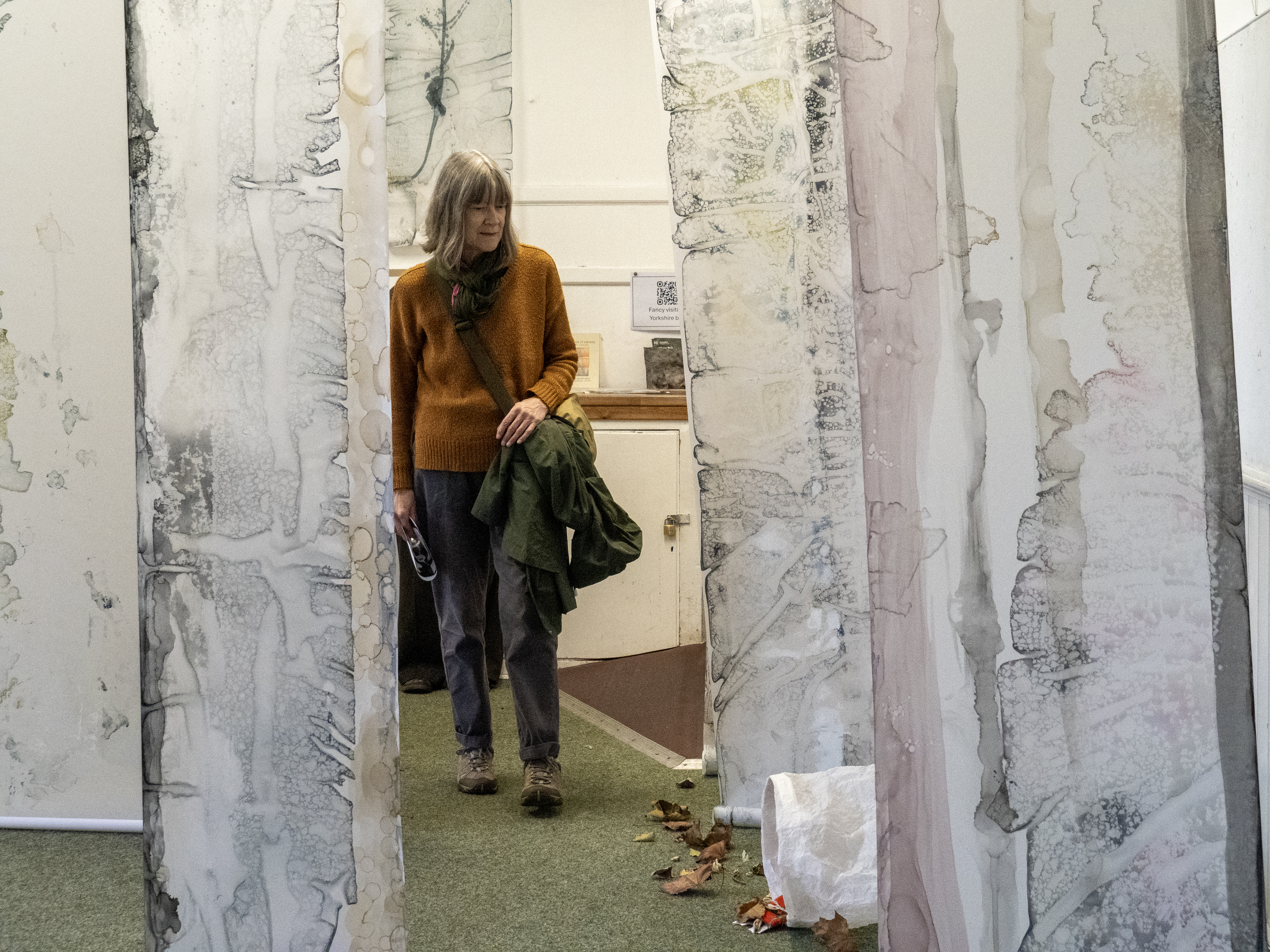
Swamp Walk. Visitors were invited to walk amongst seven suspended prints, each 3 metres long and either 50cm or 100cm wide.
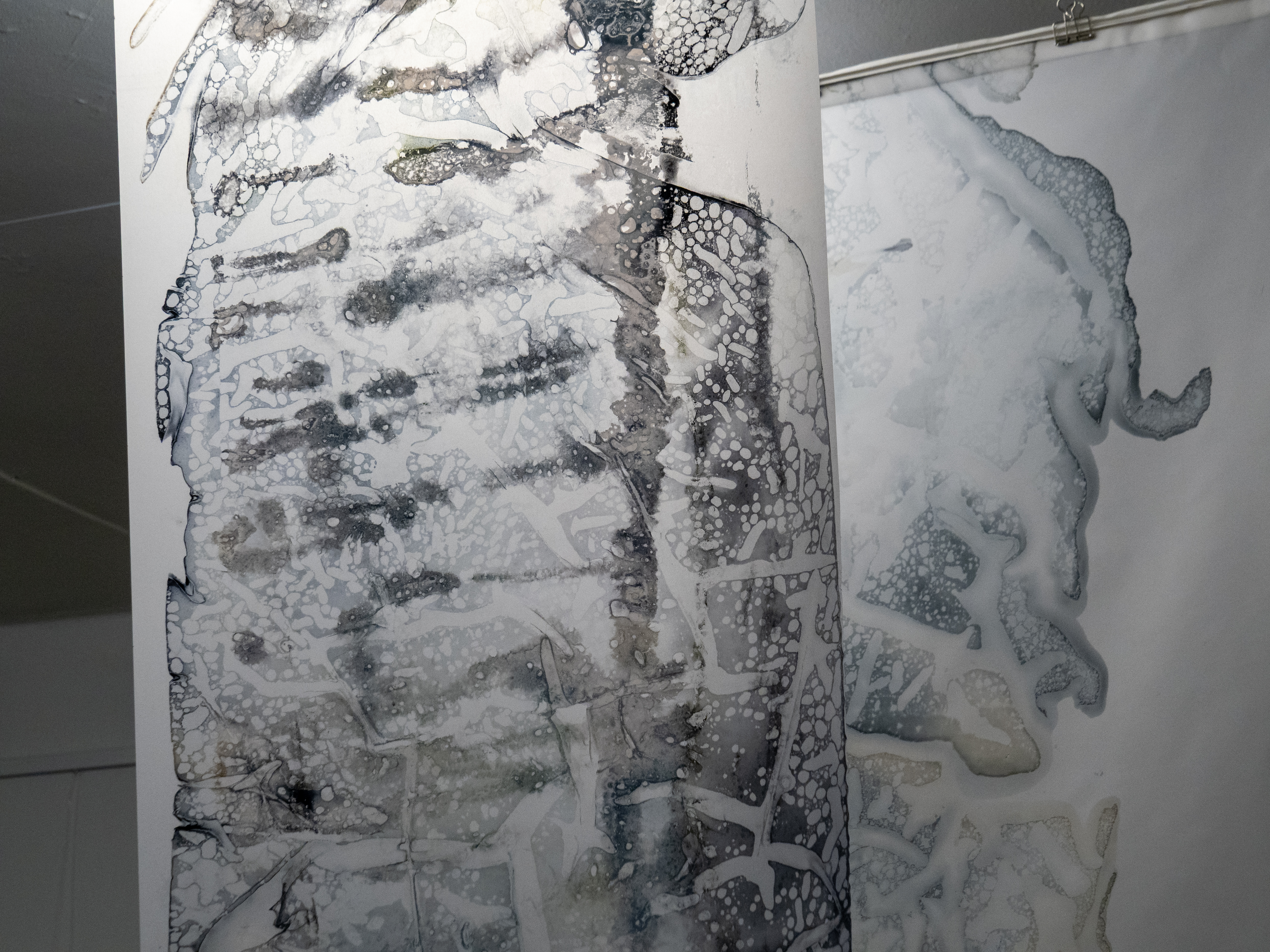
The prints are one-off pieces, created by laying tracing paper down on a layer of alcohol-based ink, and waiting – for several days – for the alcohol to evaporate. This is a new technique, discovered through experimentation. The resultant textures have a natural, organic feel. The textures, considered at a detailed level, suggest tide marks and bubbles, but, from a wider view, they recall muddy landscapes seen from above.
By staggering the pieces and inviting a walk through, the viewer gets a series of different encounters, sometimes seeing a single layer, and sometimes with layers overlaying each other. The tracing paper is semi-opaque, so sometimes marks on the layer behind can be partly seen.
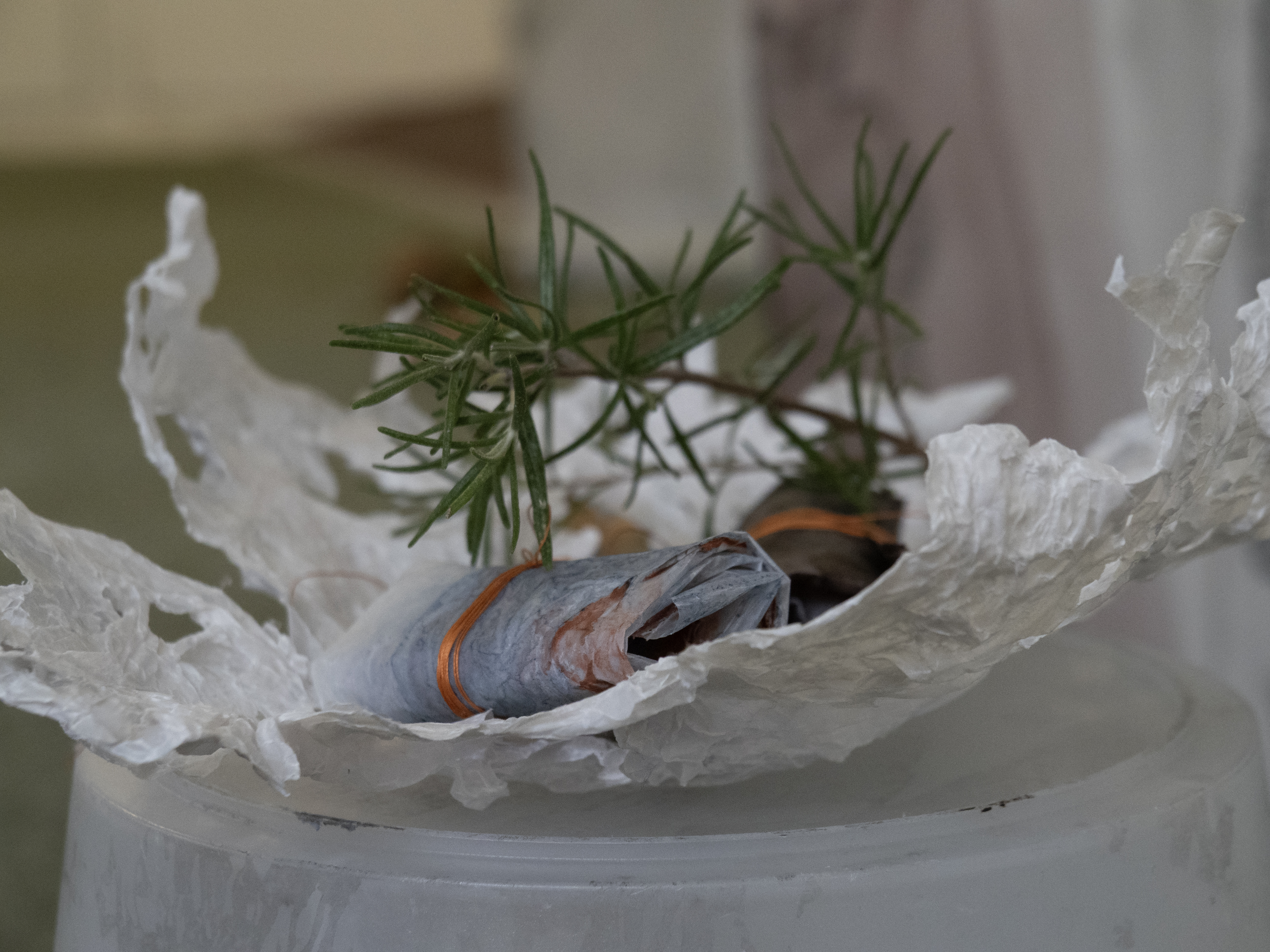
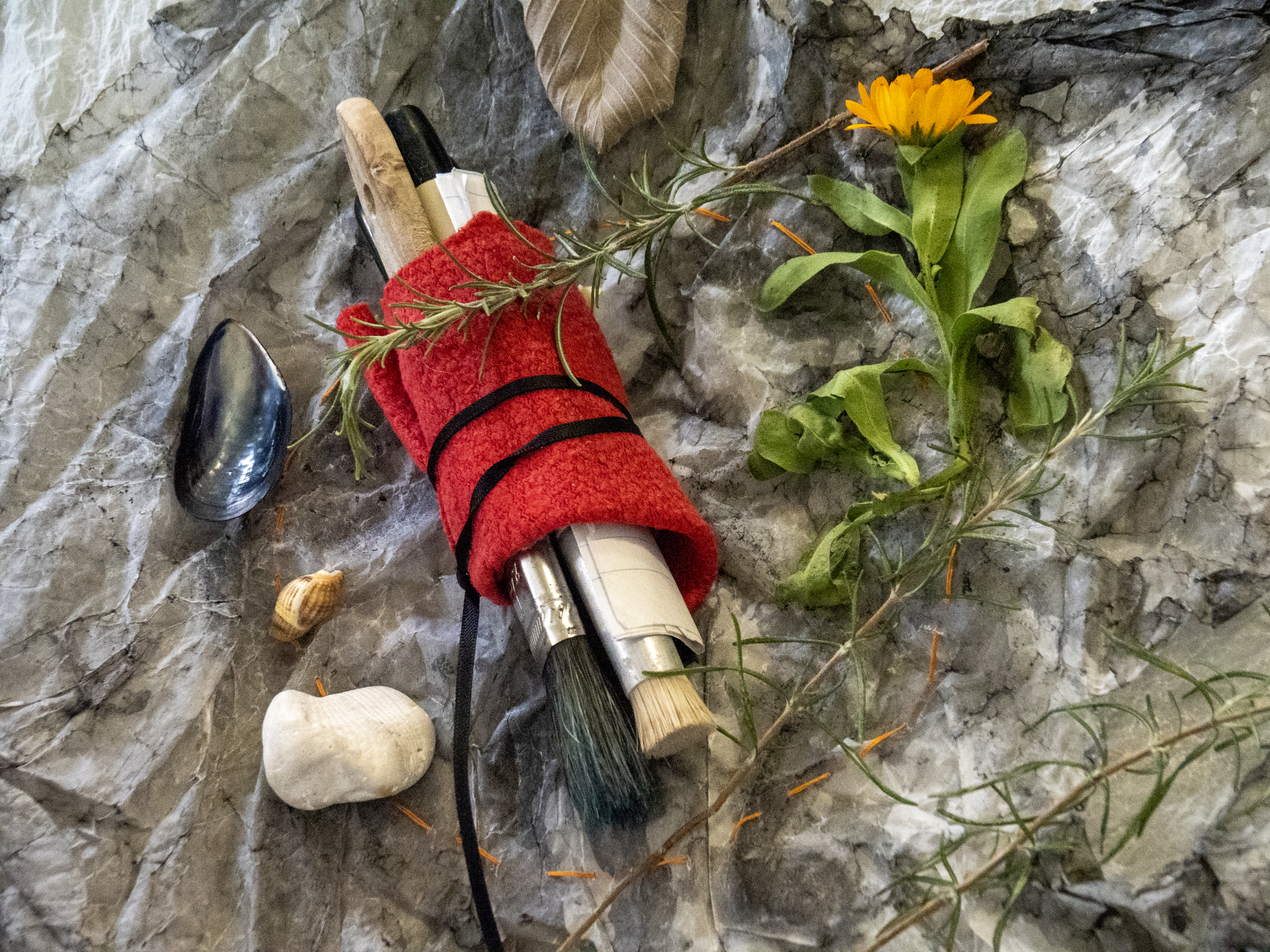
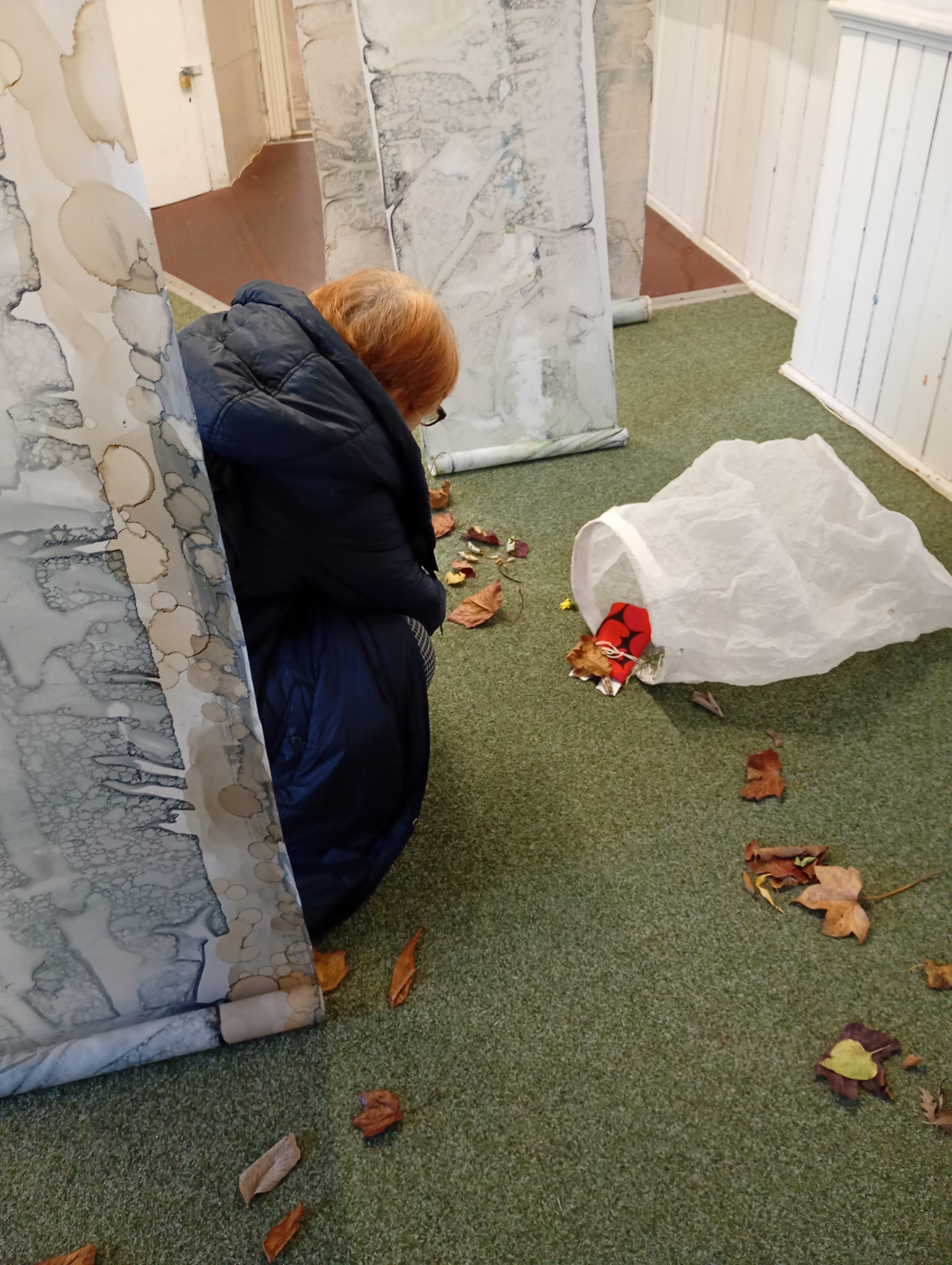
Within Swamp Walk, there were three small ‘ritual bundles’, one displayed on the floor, one partially hidden in a paper vessel and the third on top of a ‘plinth’. Hidden or partly-hidden within the bundles are small personal items, precious to the artist, due to their family memories. In prehistory, such ritual deposits were made to communicate with the ancestors, or with the spirits of the place – often a watery or marginal place. For more discussions on the archaeological aspects, please see here [to follow].

