A climate cafe is a small gathering of up to around 10 people which offers a place where fears, uncertainties and hopes about our climate crisis can be safely expressed – whilst sharing a hot drink and piece of cake!
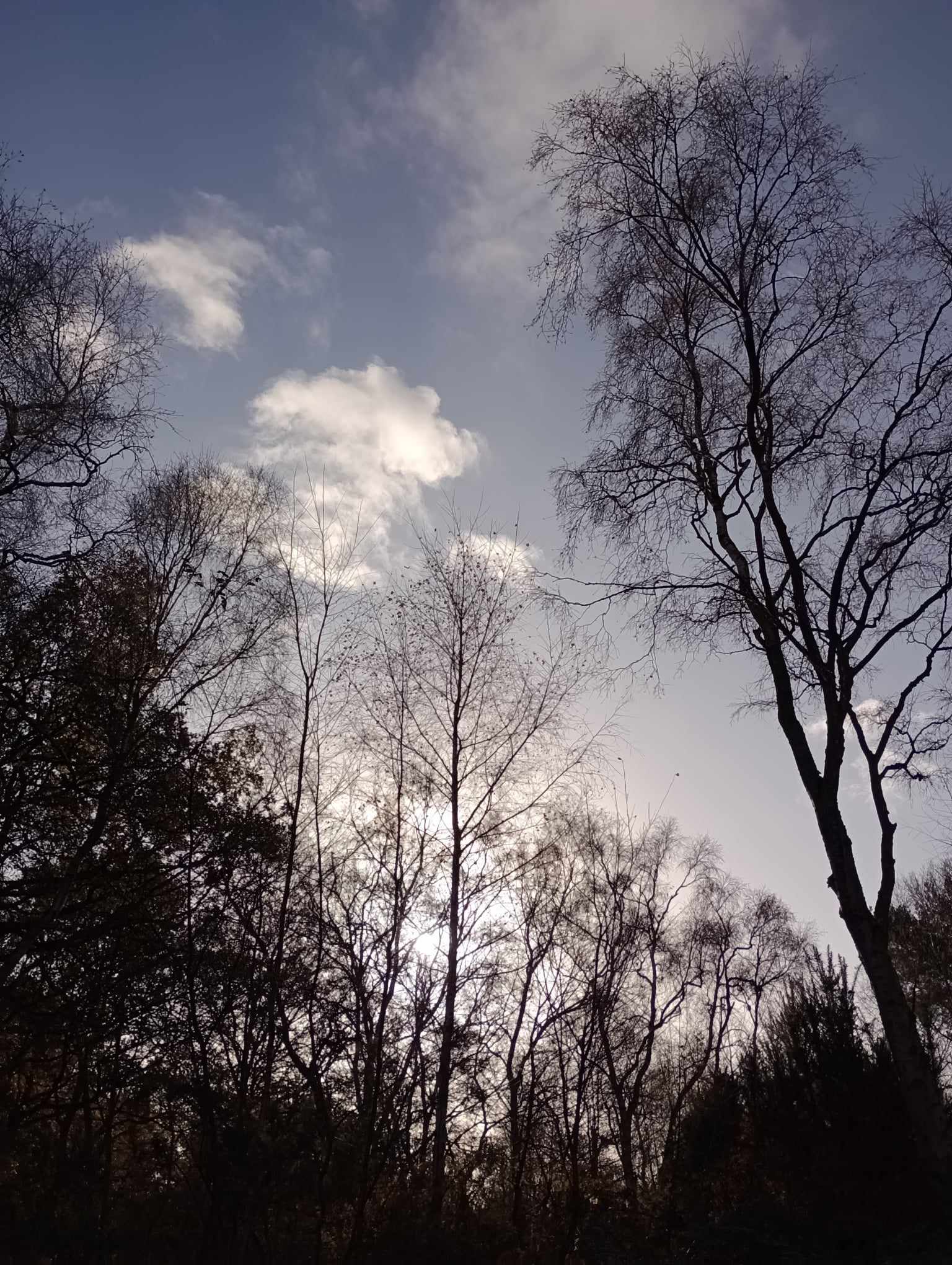
Sitting together in nature in Rowntree Park adds another grounding, positive dimension to being and talking together.
A climate cafe is a confidential, respectful, thinking and feeling space where people can meet with others and talk informally about what climate change and the ecological crisis means for them, perhaps find common ground, and listen to others’ diverse experiences and feelings.
There are a lot of these groups now in cities across the UK, and York Climate Cafe have recently set up a monthly York Climate Cafe in association with Planet South Bank. The groups run using the model developed by the Climate Psychology Alliance, which has provided training to our facilitators.
This month’s event will be held in Rowntree park.
Dress for the weather, and meet at the Dovecot outside the cafe at 7pm.
You don’t to be an environmental group to contribute to York Environment Weeks this September and October. What could your choir offer as an event?, or your sports club, or your art group, or your reading group? The organising team are looking for events across York communities. See https://yorkenvironmentweek.org.uk/ for details.
York Community Energy are looking for your views on where and how you would like renewable energy generation to be generated in York – take their survey here.
If you are interested in the state of North Yorkshire’s rivers, you may be interested in this recent talk hosted by York Friends of the Earth https://sites.google.com/view/yorkfriendsoftheearth/home – scroll down to see the video of the presentation at their July meeting.
If you already – or would like to – contribute your kitchen waste to our community compost scheme, then thank you! Our bins swiftly turn peelings and uncooked waste into fresh nutritious soil, which we use in the community garden to grow new fruit and veg.
The bins can be found next to the Community Garden alongside St Clements Church, between Scarcroft Road and Nunthorpe Road – https://maps.app.goo.gl/qhc3MAYMjHsdXWQJ9, entrance from Nunthorpe Road.
You might be surprised to discover what the compost bins can cope with – and what they can’t.
So here’s a reminder of what makes good compost, starting with the no-no’s which give our compost bins a tummy-ache:
No to:
Compostable veg-waste bags and single-use compostable drinks cups – these can be dealt with by commercial composters (such as at Hazel Court), but our bins just don’t get hot enough. Please tip out the waste from your bag into the compost bin and take the bag home to refill.
Any cooked food, whether vegetable or meat or pre-prepared food such as bread. Rats go for cooked food in compost bins, so it’s really important we all avoid this risk in our local neighbourhood.
Teabags. Did you know many teabags have plastic in? Yuk! This includes many high-quality, reputable brands. If the label on your box of teabags doesn’t explicitly say they’re plastic free, you need to assume they’re made with plastic, and so they go into your black-bin waste. (Hardcore composters will let those kinds of teabags dry out and then rip them open to compost just the tea leaves – but we’re not laying that on any of you!)
Plastic bags, nor plastic or metalitems – plastic pots and lids, teaspoons, knives, plastic bags…you’d be surprised what we find.
Dog waste bags – though we hope that’s a statement of the obvious.
And so on to the list of what our bins love to eat – again, the list may surprise you!
Yes to:
Uncooked kitchen veg waste – fruit, vegetable tops and tails, leaves, peelings, fruit peel etc (though not coconut shells!)
Coffee grounds – these are surprisingly good for compost.
Crushed-up eggshells – these bring useful minerals into the soil.
Small / torn-up bits of cardboard – eggboxes and toilet rolls are ideal. Good compost comes from a mix of vegetable matter and cardboard. You might have noticed sometimes the sheets of cardboard we keep by the bins, and which we use bit by bit to make sure the bins are getting a balanced diet.
We hope this helps you – and inspires you! Please contact info@planetsouthbank.org.uk if you’ve any composting questions.
And if you want to see where the compost goes, why not come along to one of our regular community garden sessions on Sunday afternoons, 2pm to 3pm:
And there’s a link below to July’s Foraging Walk, on 28 July, if you can’t make tomorrow.
This is the link for Sunday 28 July’s Foraging Walk.
And beyond July, the remaining Foraging Walks this year will be on Sundays 25 August and 29 September. Sign up here to receive notification of when registration opens.
Two Climate Cafes, in Rowntree Park, this Wednesday and Wednesday 17 July. If you’ve never been to one before, they’re open to anyone and free to attend. See more details in the links below.
The previous walks, in March, April and May, have all ‘sold out’ (tickets are free), so please grab your slot if you want to join either of these walks.
The final two walks will be on 25 August and 29 September; Eventbrite links for these will be promoted through the Planet South Bank nearer the time.
We are very grateful to Carl Wain, who has so generously shared his experience and wisdom through these walks.
Planet South Bank’s strapline is ‘A more resilient community, a more resourceful community, and a more connected community’. These foraging walks tick all three of this aims! Please join us on these walks to learn more about your local area.
Two Climate Cafes, in Rowntree Park, in June and July. If you’ve never been to one before, they’re open to anyone and free to attend. See more details in the links below.
Well, have you ever felt you’d like to talk about how you think and feel about the climate crisis but don’t have the chance amongst friends and family? A climate cafe is a safe, facilitated space to share your experience and to draw strength from knowing you’re not alone.
If you love nature, and are concerned about the climate and biodiversity crisis, a Climate Café is a chance to voice those feelings and to talk with others. You won’t be told what to believe or what to do. Someone once said after attending a Climate Café: “Nothing’s changed, but I feel so much better!”
If you want your address to be on Sunday’s trail: deadline is 6pm today (Thursday 9 May). e-mail info@planetsouthbank.org.uk. Be sure to include in your name, address and postcode – thank you!
New to Street-re-cycle? It’s now in its tenth year! Here’s how it works.
Sort out your stuff – books, clothes, DVDs, shoes, toys, games, small pieces of furniture…
Display your items outside your house the Sunday. There’ll be front yards and gardens full of surprises! Note: This really is a case of the more the merrier, so do talk to your near neighbours about signing up too. We’ve seen over the years that the more there’s a cluster of houses together, it makes the event more fun and you will get more visitors and general footfall resulting in more stuff being shifted.
We’ll publish a list of all the households taking part.
And as people arrive on the Sunday to see what you’re offering, you simply sell it – swap it – give it away.
It’s a great way to meet your neighbours and pass on some items in a fun and friendly way. And passing things on in this way means there’s less need for new stuff to be made in the world.
To sign up: e-mail info@planetsouthbank.org.uk by 6pm, Thursday 9 May. Be sure to include in your name, address and postcode – thank you.